

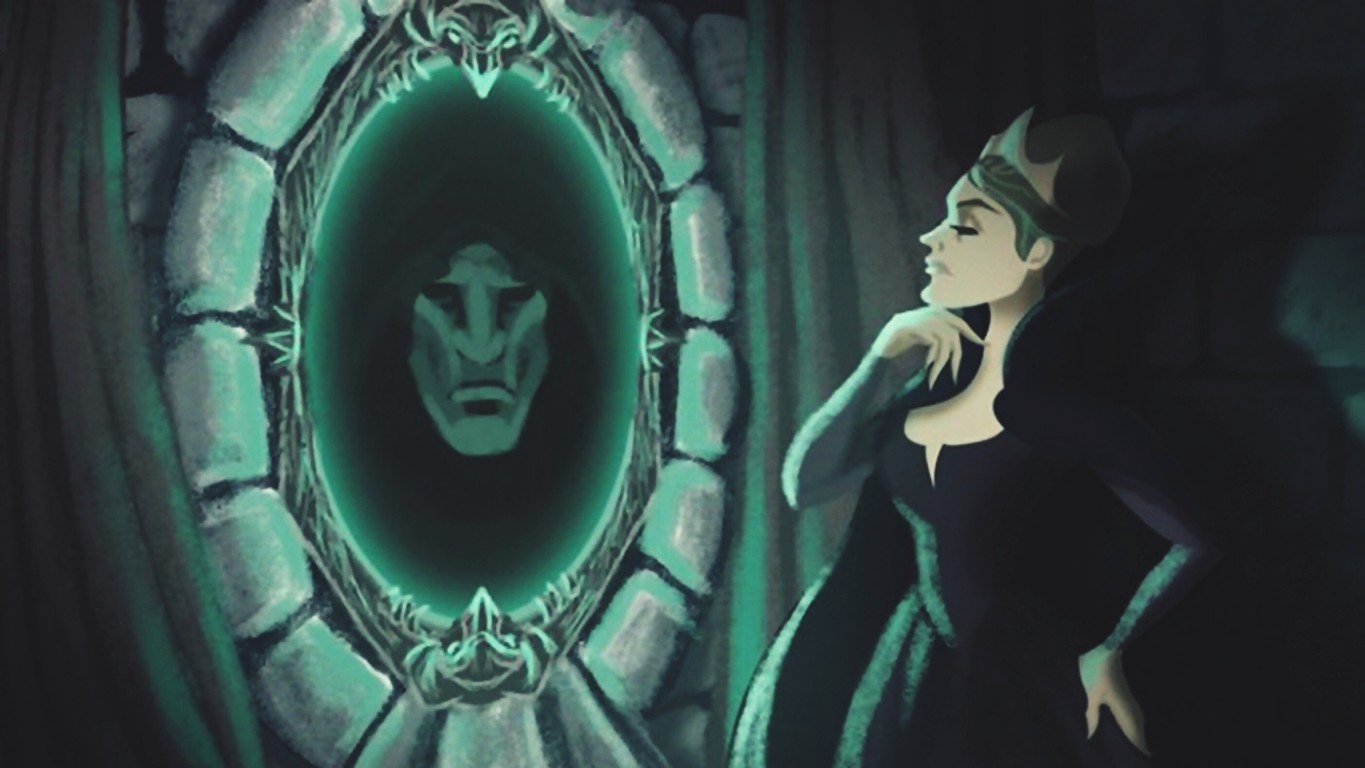
THE AMOEBA AND THE MIRROR
30 years back in the dimly lit bio lab, on a damp glass slide, illuminated by a cold cone of microscope light, there was a perfect thin section of the cell that I was trying to draw on my thick practical book. To the naked eye, it was almost nothing—less than a speck, a translucent suggestion of movement. Under magnification, however, it became a world unto itself: a shifting sac of cytoplasm, a restless droplet with appetite and intention. It advanced, retreated, engulfed, adapted. It did not know if it was alive, yet it acted like something determined to stay that way.
For most of us, this is where the story ends. The amoeba is a footnote of biology, an early chapter in the long evolutionary novel that culminates, triumphantly, in us.
But what if the amoeba is not the primitive but the mirror? What if, in the unfocused outline of this single-celled wanderer, we glimpse the truth of our own existence?
This is the uncomfortable premise at the heart of a quiet philosophical movement, one reignited 30 years later while reading the strange, stark idea known as David Harding’s mirror experiment. It is not science, not quite psychology, but something more elusive—an inquiry into whether the “self” we defend and define even exists in the way we assume. In ‘Face to Face’ the author dives into the “mirror experiment” (“the no-head experiment,” or “Headless Way mirror exercise”) is a contemplative/experiential exercise rather than a laboratory experiment. The purpose is to shift your awareness from the usual “I am inside this head/body” perspective, to a more direct “I am the awareness from which my head, body, and the world appear.” The experiment is aimed at revealing the illusion of a bounded “self” — the idea that “you are your body, inside your head.” Instead, Harding argues, what you really are is ever-present awareness; the body, head, thoughts, “you” as an individual: they are just appearances within awareness.
The amoeba and the mirror, together, form a story about what life is, what we are, and why we -the homosapiens, cling so fiercely to the illusion of being more than biology.
- The Creature That Doesn’t Know It’s Alive—And Lives Perfectly Anyway
Ask a biologist why the amoeba fascinates researchers after centuries of study, and you’ll hear two answers. One is technical: the amoeba blurs the boundaries of what a cell “should” be capable of. The other is existential.
It’s the simplicity that tricks you,” says one microbiologist I spoke with. “You think you’re looking at something basic, but you’re actually watching the minimum viable template of living behavior.”
An amoeba has no brain, yet it navigates.
No senses, yet it detects.
No consciousness, yet it responds.
It extends pseudopods—a kind of liquid limb—and surrounds its food. When conditions worsen, it hunkers down into a protective cyst. When conditions improve, it resumes its roaming. All instinct. All reaction. No internal monologue required.
What is astonishing is not that the amoeba does so little, but that we do so much in the same way. Strip away the layering—society, language, ambition, narrative—and human life is built on the same ancient machinery. Hunger. Comfort. Fear. Desire. Movement. Reaction.
At the smallest scale, we are amoebas with better costumes.
- The Human Story: A Billion Cells Trying to Feel Singular
The human body contains about 37 trillion cells. Each one is a descendant—by unbroken lineage—of organisms like the amoeba. We are, biologically speaking, compendiums of cooperation. A consortium pretending to be a singular entity.
That pretense is crucial to how we survive socially. We use words like “I” and “me” and “self” because the alternative—the admission that we are a chorus rather than a solo—is psychologically destabilizing.
Philosophers have tried for millennia to pin down what this self actually is. Neuroscientists have joined the pursuit in recent decades, only to discover that the brain is more parliament than king, a coalition of impulses competing for behavioral dominance.
Which brings us back to the mirror.
III. Nothing Stares Back: The Harding Mirror Experiment
The idea circulated quietly for years, mentioned in essays and late-night philosophical forums: try standing before a mirror and locate, with absolute specificity, the “you” you believe yourself to be.
Not your face.
Not your expression.
Not your history, roles, or narrative.
Just the “you” behind the looking.
Harding’s claim—provocative and almost rude in its simplicity—is that you won’t find it. You will find a reflection, but not a self. A collection of features, but not an owner. The eye looks for a controller and finds only an interface.
To some, this thought is liberating. To others, it feels like a psychological trapdoor.
If the amoeba shows that life can operate without identity, Harding’s mirror suggests that even our identity—our grand differentiator—may be little more than a well-rehearsed illusion held together by memory and cultural reinforcement.
In this view, humans are astonishing in scale but hollow at the core: complex behavior wrapped around a vanishing point.
- The Grand Contradiction: Acting Like Gods with Amoeba Foundations
And yet, for creatures who may be fundamentally empty of “self,” we live as though the world is ours to define, divide, and possess.
We hoard objects.
We draw borders.
We accumulate wealth.
We claim credit and territory and status.
We behave like the crowned sovereigns of Earth, as if ownership were a biological imperative rather than a cultural invention. At times, humanity appears as a species-wide performance of self-importance—an insistence that we are the protagonists of the planet’s story.
But beneath the performance, the machinery is familiar. The amoeba gathers nutrients; we gather assets. The amoeba avoids danger; we avoid discomfort. The amoeba responds to chemical gradients; we respond to emotional ones.
Scale exaggerates the difference but does not erase the continuity.
We are microscopic logic expressed macroscopically.
- What the Amoeba Knows That We Don’t
The amoeba contracts and expands.
We inhale and exhale.
Life persists in every form.
The Bhagavad Gita teaches that the true Self, the Ātman, is not the body or the shifting personality but the unchanging, ever-present awareness that witnesses all experience. It describes this Self as unborn, undying, indivisible, and present equally in all beings, and liberation arises when one recognizes this inner reality and acts without attachment or ego. This vision of a spacious, witnessing consciousness parallels the experiential insight described by Douglas Harding, who emphasized seeing that one’s sense of “I” is not confined to the body but is an open field of awareness. In the Gita, realizing this deeper Self dissolves the illusion of separation, transforms action into selfless service (karma yoga), and frees one from fear, desire, and the burdens of personal identity. Thus, while expressed in a rich spiritual and devotional context, the Gita’s core message aligns with the insight that our real identity is the limitless awareness in which the world and the body appear.
The amoeba does not wrestle with meaning; it simply lives. It does not project itself into the future, nor curates a past. It is metabolically honest—everything it does is what it must do to remain alive.
Humans, by contrast, often live inside stories rather than inside experience. Our sense of self is a narrative we carry like a fragile heirloom. Harding’s mirror threatens that heirloom by asking us to look directly at its seams.
Yet perhaps the point is not that we are nothing. Perhaps it is that we are both nothing and everything: Nothing, in the sense that the “self” we defend is impossible to locate. Everything, in the sense that life—at any scale—is a continuous, ceaseless phenomenon expressing itself through us.
- The Final Reflection
Stare long enough at an amoeba, and its formlessness becomes oddly familiar. Stare long enough into a mirror, and your form becomes strangely foreign.
Somewhere between those two perspectives lies the truth of being human: not a sovereign self, not a meaningless blob, but a perpetually shifting constellation of impulses, memories, behaviors, and reactions—a structure built on ancient logic and layered with modern illusion.
We are, perhaps, small.
We behave undeniably, as though we are large.
We may be nothing in essence. We act as though we are everything in practice.
And Life, in all its scales, seems content to let both be true. Life itself doesn’t draw lines- life flows, evolves, mutates, adapts. But the human mind is a boundary-making engine. It carves distinctions so it can predict, remember, plan, and survive. Yet the paradox is that the line is imaginary. We spend our lives defending a boundary that life itself never acknowledges. Amoeba, mirror, cosmos—none of them insist on a distinction. Only we do. The same cognitive machinery that lets us build cities also convinces us that our stories, preferences, and anxieties are the center of the universe.
Exactly—many of our problems arise precisely because of the sense of a fixed, separate identity. When we cling to the idea of “I” as a bounded, sovereign self, we build a fragile fortress of expectations, desires, and fears around it. We measure life against this imagined center: “What do I want? What threatens me? Who is right, who is wrong?” Every disappointment, conflict, or anxiety is amplified by this lens because it feels personal, as though the world revolves around that small, constructed self.
Without this rigid sense of identity, much of the tension that drives suffering softens. Pain is still felt, decisions still need to be made, life still unfolds—but the stakes feel lighter. There is no “I” to be insulted, no ego to be defended, no imagined control to be lost. The problems do not vanish entirely, but their gravity changes: they become phenomena passing through awareness rather than personal crises. In other words, the suffering isn’t inherent in the events themselves, it arises because we attach them to a story about who we think we are.
This is why reflection, observation, and the kind of awareness Harding and the Gita speak of matter. By loosening the grip of the rigid identity, we can meet life directly, see it clearly, and respond with presence rather than reaction. The problems were never the problem; the problem was the “I” that insisted on taking them personally.

![[ India Today ] Ohio senator JD Vance thanks wife, a Hindu, for helping him find Christian faith](https://hinduvishwa.org/wp-content/uploads/2024/06/us-senator-jd-vance-reveals-how-his-hindu-wife-usha-helped-him-find-his-christian-faith-image-re-272530504-16x9_0-120x86.webp)